Take Your First Step into Research
At the Yamane Laboratory, we integrate MEMS, functional materials, LSI technologies, AI, and related fields to develop and evaluate real devices and create new technological value.
Students can become involved in research step by step, from research experiences in the first and second years, to preliminary laboratory activities in the third year, and graduation research in the fourth year, with opportunities to continue their research into Master’s and doctoral studies.
Research skills are developed progressively through these experiences.
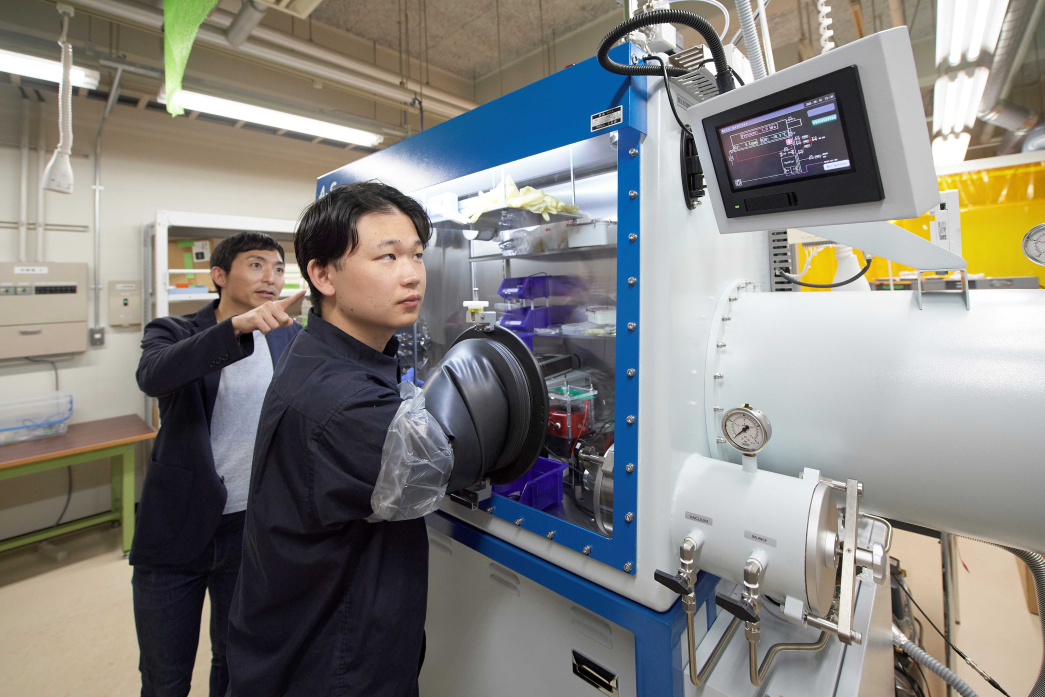
Students conduct hands-on research using advanced laboratory equipment while discussing their work with faculty.
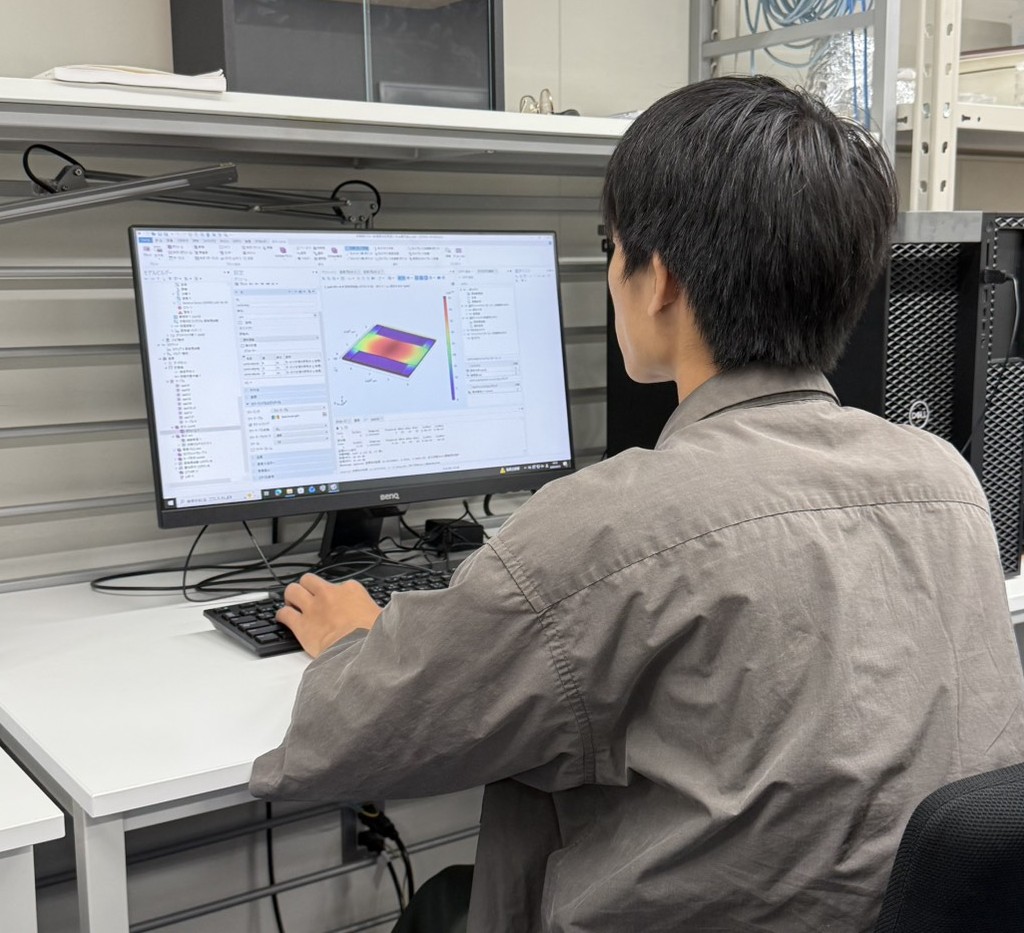
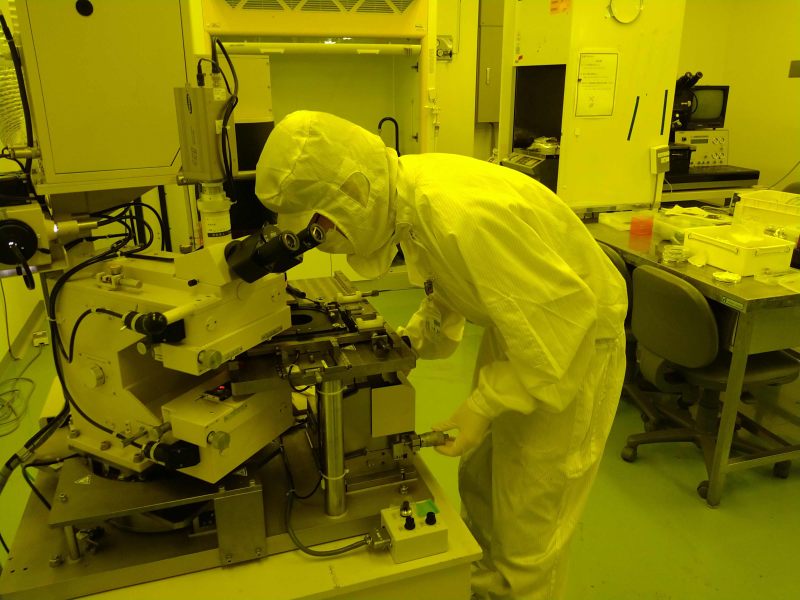
Undergraduate students gain experience in the entire research process, from design and analysis to microfabrication, experiments, and evaluation.
Undergraduate Research Path
1st–2nd Year | Research Experience
Start by visiting the laboratory and experiencing research activities. Students who develop a strong interest may also have opportunities to explore actual research topics.
- Laboratory visits
- Introductory research experience
- Exploration of research topics based on individual interests
3rd Year | Laboratory Preparation
Begin exploring research topics and learn the fundamental knowledge, experimental techniques, and simulation tools needed for research.
- Selection of research topics
- Fundamental knowledge and technical skills
- Training in experiments and data analysis
4th Year | Graduation Research
Conduct a full research project leading to a graduation thesis and research presentation, with opportunities to continue the work in graduate school.
- Independent research project
- Graduation thesis and research presentation
- Connection to Master’s-level research
Examples of Research Activities
Depending on the research topic, students experience the full research process, from defining a research question to device fabrication, experiments, analysis, and presentation of results.
1. Research Topic & Fundamentals
Understand the background and challenges of the research and learn the fundamental knowledge, methods, and tools required for the project.
2. Device Fabrication, Experiments & Analysis
Work on MEMS fabrication, electrical, mechanical, and optical measurements, simulations, and data analysis.
3. Presentation of Research Results
Discuss results in laboratory meetings and, depending on progress, present research at academic conferences or contribute to publications.
4. Further Development
Continue undergraduate research into Master’s-level research and expand it through collaborative or international research opportunities.
Frequently Asked Questions
Below are frequently asked questions about graduation research, laboratory life, and graduate study.
Laboratory Life & Supervision
We do not have a fixed core time. Students are expected to manage their own schedules and make steady progress in their research at their own pace.
Student room: Each student is provided with a laptop computer, PC monitor, desk, chair, and other necessary equipment.
Laboratory: We have a dedicated laboratory in Excel 3 and also use several shared experimental facilities on campus.
If you would like to learn more about our student rooms or laboratory facilities, please feel free to contact Prof. Yamane.
During the research preparation period (e.g., the latter half of the fall semester in the third year and the spring semester in the fourth year):
Students give progress presentations approximately once a week. Faculty members also provide lectures on how to conduct research and on the fundamentals of MEMS technology. These meetings involve active discussions in which all students are encouraged to participate.
We also hold a weekly journal and book reading seminar, where students freely discuss relevant technologies and research topics.
After full-scale research begins:
Meetings are arranged flexibly according to research progress. Rather than always meeting as an entire laboratory, discussions are more often held within individual research teams or project groups.
Communication:
To reduce unnecessary email exchanges, both group-wide and individual communication is mainly handled through Slack. Online meetings are also used regularly.
In addition to trips for academic conferences and off-campus research activities, we also organize social gatherings and laboratory retreats. The types and frequency of these activities are decided while taking students’ opinions into account.
Yes. We believe that students can also learn a great deal through part-time work and extracurricular activities, so we do not impose particular restrictions as long as these activities do not negatively affect their research.
We aim to continuously produce research at the international forefront and to develop the laboratory into one of Japan’s leading centers for MEMS and micro-mechatronics research.
At the same time, we also want to create a laboratory environment in which students feel comfortable and enjoy conducting research.
Prof. Yamane received his Ph.D. from the University of Tokyo and subsequently worked at UCLA and Tokyo Institute of Technology before joining Ritsumeikan University.
For more information, please see the Faculty Profile →
Graduation Research & Research Topics
Faculty members propose several possible research topics, but students are also very welcome to suggest their own ideas. We discuss each student’s interests and strengths carefully before deciding on a research topic that the student is comfortable and motivated to pursue.
No prior research experience or specialized knowledge is required. After joining the laboratory, students can acquire the necessary fundamental knowledge and skills through lectures, exercises, and hands-on experiments within the laboratory.
We do not require a specific level of English proficiency when students first join the laboratory. However, English is essential for conducting research, and faculty members provide support according to each student’s level.
For example, we are currently conducting international collaborative research through three projects. Joint online meetings in English are held once or twice a month for each project, and students are encouraged to actively participate in the discussions.
Yes. Once meaningful research results have been obtained, students are strongly encouraged to present their work at academic conferences in Japan and abroad.
Every year, many of our undergraduate and graduate students attend conferences as part of their research activities. Presentation practice is conducted as part of our laboratory seminars. Preparing a high-quality presentation requires considerable effort, but it is also an excellent opportunity for personal and professional growth.
Yes. Interested students can begin by visiting the laboratory and participating in research activities as student researchers. Depending on their interests and level of understanding, they may also have opportunities to work on actual research topics.
Graduate Study & International Opportunities
So far, most of our students have chosen to continue to graduate school of their own accord.
For information on the career destinations of our undergraduate and graduate students, please see the Alumni page →
Students begin research activities during the preliminary laboratory assignment period in their third year. However, because research requires time to acquire fundamental knowledge and to become familiar with various experimental instruments, simulation tools, and research methods, full-scale research often begins after entering the Master’s program, depending on the topic.
For this reason, research topics and plans are often designed with continued research in graduate school in mind.
Yes. We conduct collaborative research with numerous universities, research institutes, and companies in Japan and abroad. Collaborative projects often address practical and highly interesting research topics, but students are also expected to approach them responsibly as members of the research team.
Yes, there are many opportunities.
Our current international partners include National Tsing Hua University in Taiwan, the University of Southampton in the United Kingdom, and Czech Technical University in Prague in the Czech Republic.
In addition to online research meetings held once or twice a month, several students each year visit our partner institutions for short- to mid-term research stays, ranging from several weeks to approximately two months, where they conduct joint experiments and research with our collaborators.
Interested in Joining or Visiting Our Lab?
If you are considering joining the Yamane Laboratory, we recommend participating in a laboratory visit or contacting Prof. Yamane for an individual consultation.
You are welcome to ask about our research topics, laboratory life, laboratory assignment, and graduate study opportunities.
Laboratory Visits & Inquiries: dyamane (at) fc.ritsumei.ac.jp
(Please replace “(at)” with “@” when sending an email.)
View Our Research →